

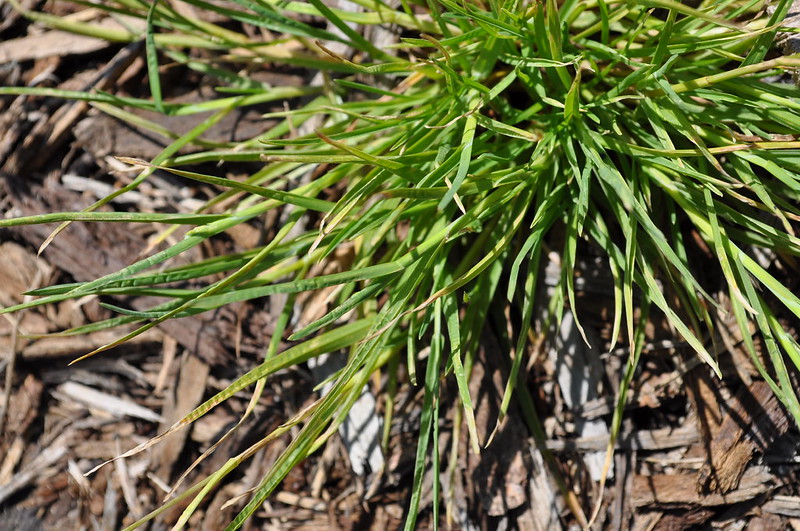
As we’re currently in the winter months here in Galveston County, one of the most persistent and troublesome weeds producers will encounter is Annual Bluegrass, scientifically known as Poa annua. This cool-season annual weed germinates in the fall, thrives all winter long, and becomes highly competitive in both hayfields and grazed pastures.
What Makes Annual Bluegrass a Problem?
Annual Bluegrass is more than just a nuisance, its growth pattern makes it one of the most competitive winter weeds in our forage systems. It germinates when temperatures cool down, grows aggressively during mild winters, and steals valuable nutrients and soil moisture from desirable forages.
Key issues include:
- Competing with over seeded ryegrass during establishment
- Weakening bermudagrass stands before spring green-up
- Reducing hay yields by forming thick patches that crowd out warm-season grasses
- Creating uneven forage quality and palatability within pastures
Identification Tips
Annual Bluegrass can be recognized by:
- Its bright green, fine-textured leaves
- A boat-shaped leaf tip
- White, open seedheads that appear even when the plant is only a few inches tall
- Growth in dense, low patches, often in compacted or moist areas
Once seedheads appear, control becomes far more difficult which in turn makes early detection crucial.
Management Strategies
Managing Annual Bluegrass requires a combination of timing, fertility, and grazing management.
- Prevention Through Pasture Density
- Healthy, vigorous grass stands naturally suppress Poa annua. Avoid overgrazing heading into fall.
- Fertility Management
- Overapplication of nitrogen in early fall can actually encourage cool-season weed growth. Apply N intentionally and only when desired forages can utilize it.
- Chemical Options
- Control is most successful when Annual Bluegrass is young and actively growing.
- Post-emergent herbicides labeled for Annual Bluegrass can work in mild winter temperatures, but results vary and timing is critical.
- Always follow label directions, especially when overseeding with ryegrass or other winter forages.
- Pre-emergent herbicides (applied in September-October) are the most effective way to prevent establishment.
Photo credit: Cornell IPM, Creative Commons





 KGTX 7 Galveston County