

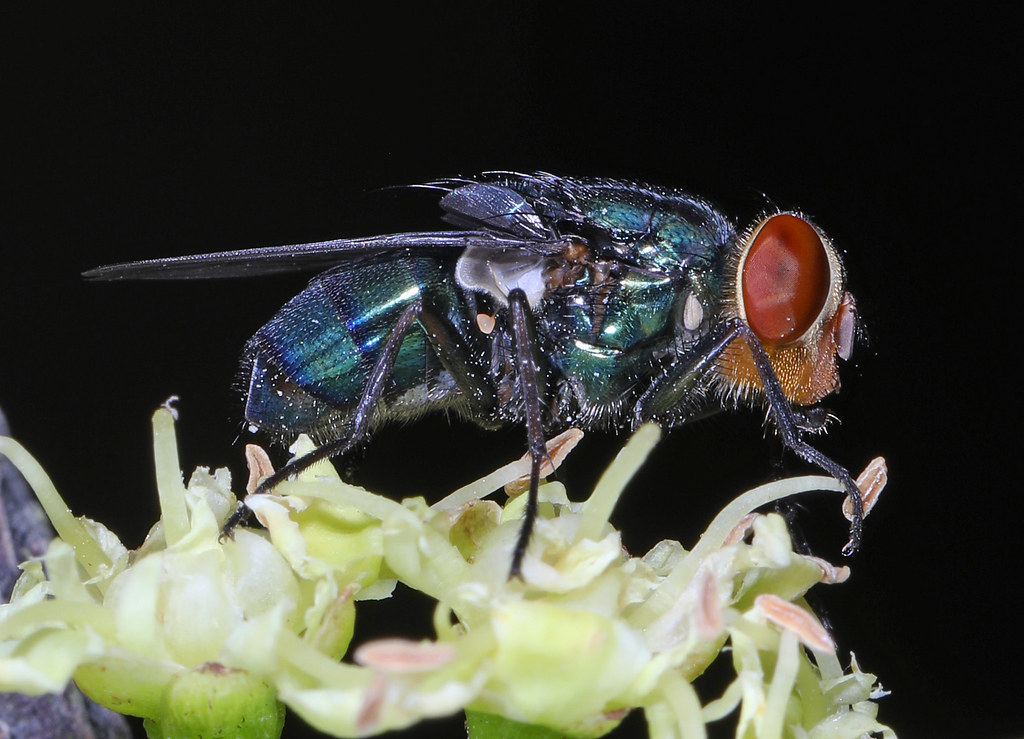
I want to take a minute and remind the public, veterinarians, and livestock producers about the biology and identification of the New World screwworm fly, an insect historically associated with animal health management in the United States.
According to Texas A&M AgriLife Extension, the New World screwworm is a species of parasitic fly whose larvae develop in open wounds of warm-blooded animals. Unlike common blow flies, which lay eggs on dead or decaying tissue, screwworm flies lay eggs on living tissue, particularly around wounds, navels of newborn animals, surgical sites, and injuries.
Life Cycle and Identification
Adult screwworm flies resemble common houseflies but are typically identified by:
- A metallic blue-green body
- Three dark stripes along the thorax
- Orange to reddish eyes
Female flies lay eggs on the edges of wounds. After hatching, the larvae feed on living tissue and burrow deeper into the wound as they develop. The larvae have a distinctive screw-like appearance, which is where the insect gets its name. Once development is complete, larvae drop to the ground to pupate and later emerge as adult flies.
Animals Affected
Historically, screwworm larvae have been found in:
- Cattle
- Horses
- Sheep and goats
- Swine
- Wildlife
- Pets
In rare cases, humans may also be affected.
Historical Context
The New World screwworm was eradicated from the United States in the 1960s through a cooperative effort involving state and federal agencies using the sterile insect technique. While the fly is no longer present in the U.S., it remains established in parts of Central and South America. Because of this history, education and awareness remain important components of livestock health management.
General Animal Management Practices
I want to encourage routine animal management practices that support overall animal health, including:
- Regular inspection of animals
- Prompt cleaning and treatment of wounds
- Monitoring newborn animals
- Maintaining good sanitation and fly management practices
Understanding the biology and identification of insects like the New World screwworm helps producers, veterinarians, and animal caretakers recognize abnormal wound activity and communicate effectively with animal health professionals when needed.
For more information, feel free to contact me, Brock Sanford, at Texas A&M AgriLife Extension – Galveston County office, (281) 309-5064.


 KGTX 7 Galveston County