

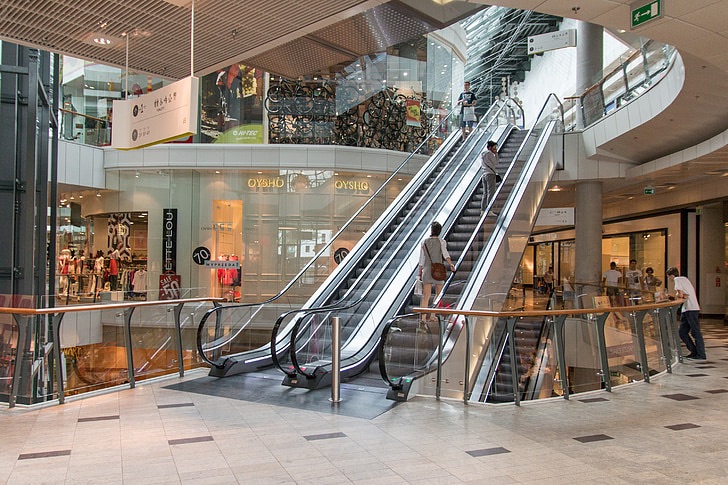
There was a time when doing something simple required a little effort.
If you wanted a new shirt, you drove to the mall. You walked into a store, ran your hand across the fabric, stepped into a dressing room, and looked at yourself in the mirror. If you wanted to see a movie, you checked the showtimes, drove across town, bought a ticket, and sat in a dark theater with a room full of strangers as the lights dimmed.
Today, most of that can happen without leaving the couch.
With a few taps on a phone, a shirt can be ordered and delivered the same afternoon. Movies appear instantly on streaming services. Groceries show up at the door. Convenience has become the defining feature of modern life.
In many ways, that’s remarkable. Technology has eliminated barriers that once made everyday tasks time-consuming. But somewhere along the way, something subtle has been lost. Friction.
Not the kind that causes problems, but the kind that adds texture to life.
For most of human history, experiences came with a little resistance. You had to go somewhere. You had to wait. You had to search. That effort created anticipation. The trip to the store wasn’t just about buying something; it was an outing. Going to the movies wasn’t just about watching a film; it was an event.
Those small inconveniences did something important. They turned ordinary moments into stories.
Think about the difference between clicking a button and driving across town to find the last item in stock at a particular store. The end result may be the same; a shirt in your closet, but the path to get there is very different. One becomes a forgettable transaction. The other becomes a memory.
Modern technology has optimized life for efficiency. Companies compete to make purchases faster, deliveries quicker, and services more immediate. The less effort required, the better the system works.
But people are not machines built for efficiency alone.
We are wired for experiences. We remember journeys, not shortcuts. We talk about the road trip, the night at the theater, the afternoon wandering through stores with friends. Those moments have shape and narrative. They create a beginning, a middle, and an end.
Instant gratification removes most of that structure.
When everything is available immediately, anticipation disappears. The process vanishes. Life becomes a series of outcomes rather than experiences.
That doesn’t mean technology is the enemy. The conveniences of the modern world are extraordinary, and few people would truly want to give them up entirely. The challenge is remembering that not every moment needs to be optimized.
Sometimes the longer way is the better way.
Drive a little farther to pick something up in person instead of ordering it online. Go to the movie theater instead of streaming at home. Walk through the aisles of a store rather than scrolling through a digital catalog.
None of those choices are necessary anymore. That’s precisely why they matter.
In a world that constantly pushes toward speed and convenience, choosing the slower experience, even once in a while, brings something back that modern life often strips away: the feeling that the moment itself is part of the reward.
A little friction might be exactly what makes life feel real.
Photo credit: PickPik, Creative Commons



 KGTX 7 Galveston County