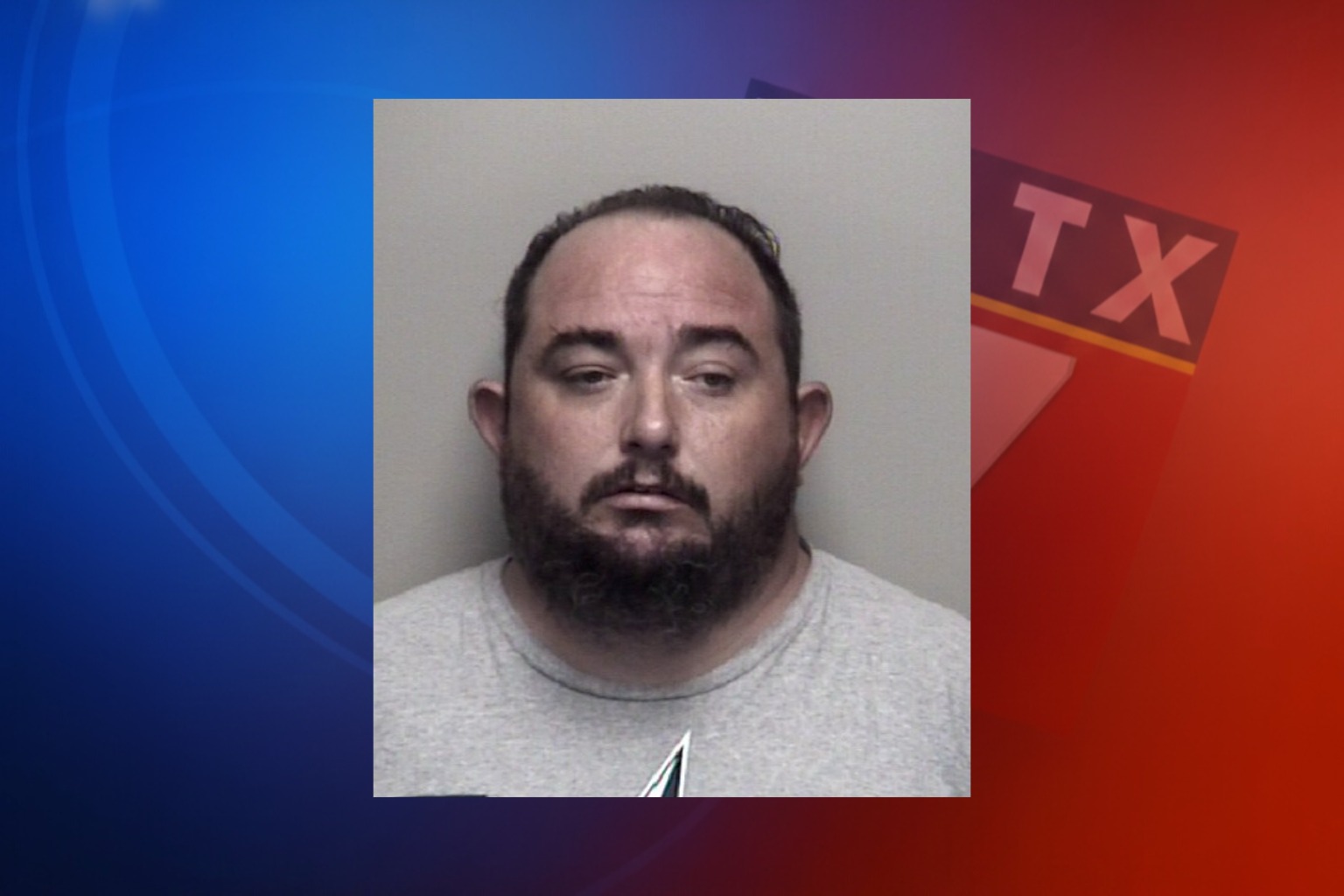
GALVESTON — A Galveston County case is drawing attention for both its legal outcome and the questions it leaves behind following the sentencing of a man charged in a fentanyl-related death.
On Thanksgiving Day 2023, 39-year-old Wade Potter was found dead inside his home in what was believed to be a drug-related incident.
“When I found him dead, I actually saw on the counter drugs,” Brandi McKnight said. “So I put my hands up and backed out of the bathroom and immediately went outside and called the police. I knew then that it had something to do with drugs.”
McKnight described seeing drugs and paraphernalia at the scene, reinforcing her belief that Potter’s death was tied to substance use.
More than two years after Potter’s death, 35-year-old Cameron Zaheri was charged in connection with the case, becoming one of the first defendants in Galveston County to be charged with and plead guilty to a fentanyl-related murder.
Still, questions remain about key testimony and the circumstances surrounding the case.
“Michael testified and said he knew it was fentanyl,” McKnight said. “But he’s the one who introduced Wade to Cameron, and he was still in communication with Cameron after Wade’s death. To me, that creates a really big issue with his testimony.”
In an email to KGTX 7 News prior to the March 20, 2026 hearing, Judge Patricia Grady wrote that “part of the information you received is incorrect” and noted that the defendant had not yet been formally sentenced at the time. Grady also stated that the Rules of Judicial Conduct limited her ability to comment while the case remained pending.
During sentencing, Grady addressed factors she said the court considered before handing down the punishment.
“There is some doubt as to whether or not the victim was trying to take his own life by using drugs,” Grady said in court, according to a transcript of the hearing. “The victim had knowledge of the type of drugs he was taking, but this does not let Mr. Zaheri off the hook.”
Grady went on to describe the probation terms as “very stern,” adding that Zaheri would receive the maximum amount of community service, serve 180 days “day for day” in jail as a condition of deferred adjudication probation, and remain on deferred adjudication for 10 years.
On March 20, 2026, the Potter family watched Judge Grady hand down the sentence: 180 days in jail followed by 10 years of deferred adjudication probation.
For McKnight, the decision was devastating.
“I was absolutely devastated because she put Wade’s life into three months of his entire life,” she said. “To me, it felt very much like she was victim blaming Wade.”
Texas law allows deferred adjudication in some felony cases, depending on the circumstances of the offense and judicial discretion. However, the outcome has left Potter’s family questioning how that discretion was applied in this case.
“That means in 10 years, if he doesn’t do anything wrong, he gets off probation and his record is wiped clean, so the murder doesn’t even exist,” McKnight said. “I feel like I was robbed of my voice.”
While deferred adjudication can allow a defendant to avoid a formal conviction if probation is successfully completed, court records related to the case generally remain accessible.
McKnight said she was not given the opportunity to review her victim impact statement before sentencing and felt it carried little weight afterward.
“I still read it, but it felt pointless at that point,” she said.
She also questioned whether a statement she gave to police in the immediate aftermath of Potter’s death may have influenced the outcome.
“I don’t really remember a lot of what happened that day. It’s kind of a blur,” McKnight said. “Apparently I gave a statement… and said it was possible that he was suicidal. I do not remember saying that.”
The family has also pointed to other cases in neighboring counties, arguing the punishment in this case is inconsistent.
“People in Harris County are getting charged with distribution leading to a death and they’re getting one to five years in prison,” McKnight said. “So it makes no sense why she would give this sentence.”
Court records show Zaheri accepted responsibility through a guilty plea and waived his right to appeal.
In the wake of the sentencing, McKnight said she has begun working with advocacy organizations, organizing marches, and has reached out to the Texas Attorney General’s Office seeking a broader review of the judicial process.
As the case continues to draw attention, the Potter family says the impact of Wade’s death — and the broader fentanyl crisis — remains impossible to ignore.
“To this day, it’s still something that I deal with. You don’t forget finding somebody dead,” McKnight said. “Every day there’s at least seven deaths or more from fentanyl. This is not just affecting people struggling with addiction. There are children that are dying from this… This is something that is way bigger than just Wade’s case.”