KEMAH — As Autism Awareness Month continues through April, the Kemah Police Department is working to improve how officers interact with individuals on the autism spectrum during high-stress situations.
Police Chief Raymond Garivey says the department is taking proactive steps to ensure officers are better prepared before specialized training becomes a statewide requirement.
“We’re getting ahead of that by doing it now before we’re asked and mandated to do it,” Garivey said. “And we do that because we care.”
Across Texas and the country, more law enforcement agencies are placing increased focus on autism-specific training and community outreach during April, which is widely recognized as Autism Acceptance Month.
Garivey said one of the department’s main goals is helping officers recognize behaviors that may be associated with autism, including avoiding eye contact, limited verbal communication, or communicating through gestures.
Those signs, he said, can sometimes be mistaken for noncompliance or suspicious behavior if officers are not properly trained.
“Sometimes not understanding that person could lead to a situation escalating,” Garivey said. “We love the word de-escalation. We teach them these signs through this class.”
According to Garivey, the training emphasizes that autism is not “one size fits all,” and that every person on the spectrum may communicate and respond differently.
The department has also introduced free vehicle decals for families to place on the rear window of their vehicles. The decals are intended to alert responding officers that someone inside may be autistic, helping officers approach traffic stops and emergency calls with greater awareness.
Programs like vehicle decals and officer registries have been adopted by other departments nationwide as part of broader efforts to improve outcomes during law enforcement encounters.
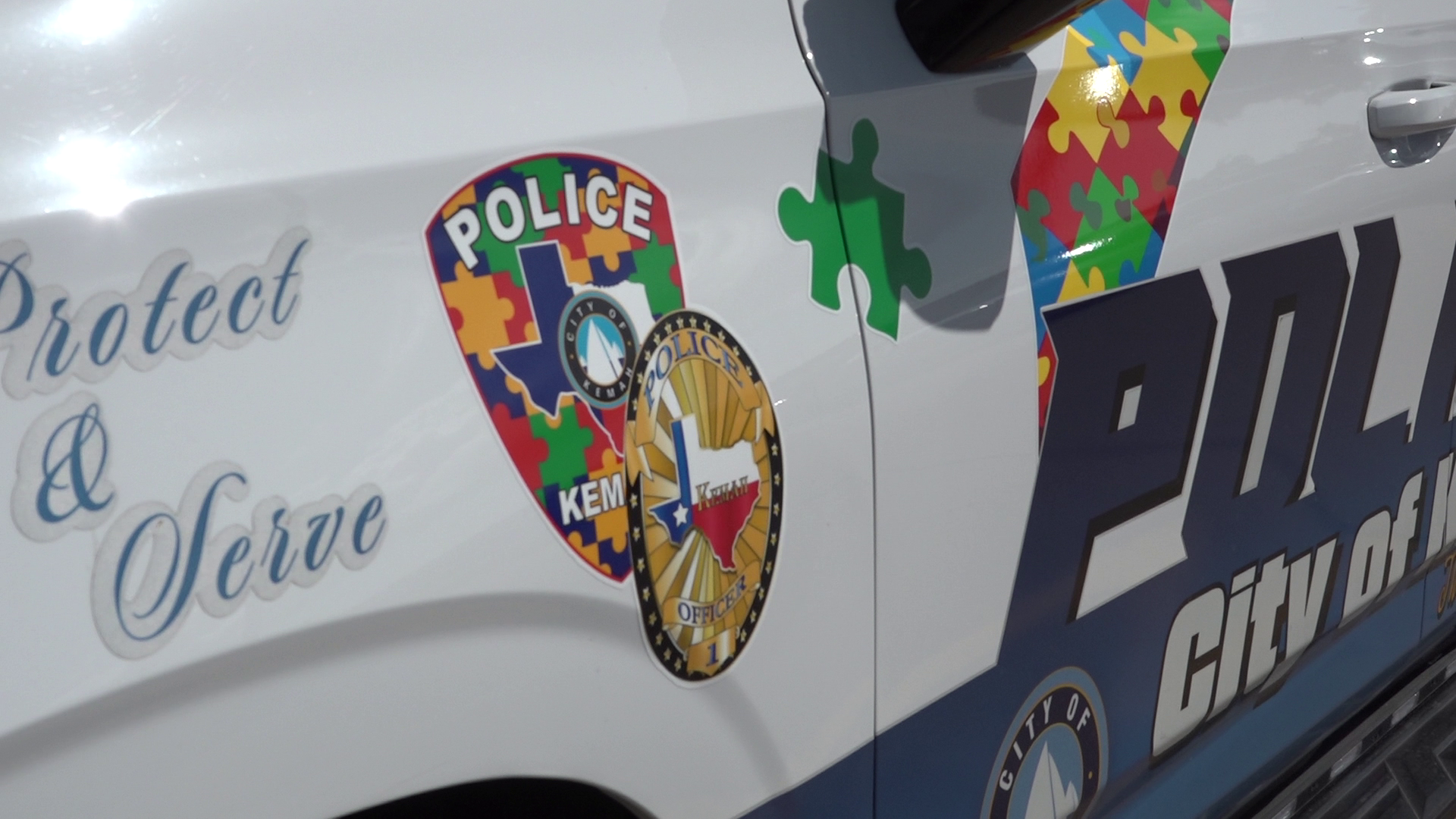
In addition to training, the department has unveiled a specially marked patrol vehicle featuring an autism awareness ribbon and a message that reads, “We care.”
Garivey says the response from the public has been overwhelmingly positive.
“The officer that drives it has been getting thumbs up, people honking at him at an intersection,” he said. “That’s what it’s all about — positive interaction with the community, bringing awareness to autism and supporting them any way we can.”
Garivey said he hopes other law enforcement agencies across Texas adopt similar programs and training.
“These kids and adults, they all matter,” he said. “Our job is to be passionate to those in need, to go that extra mile beyond the call of duty.”